
No single food protects your brain. Not blueberries, not walnuts, not whatever this month’s superfood headline sells. What the research actually supports is a pattern: the way you eat across weeks and years. The good news is that the pattern is simple, tasty and cheap.
Written and fact-checked by RecallPath Editorial Team. Last updated: . About our editorial process.
- Typical cause: Brain health is driven by eating patterns, not single superfoods.
- What works: Mediterranean-style eating: fish, greens, berries, nuts, olive oil, beans.
- Timeline: Dietary patterns show effects over months and years, not days.
- Safety note: Supplements fill gaps; food covers the base. Test B12 and D after 60.
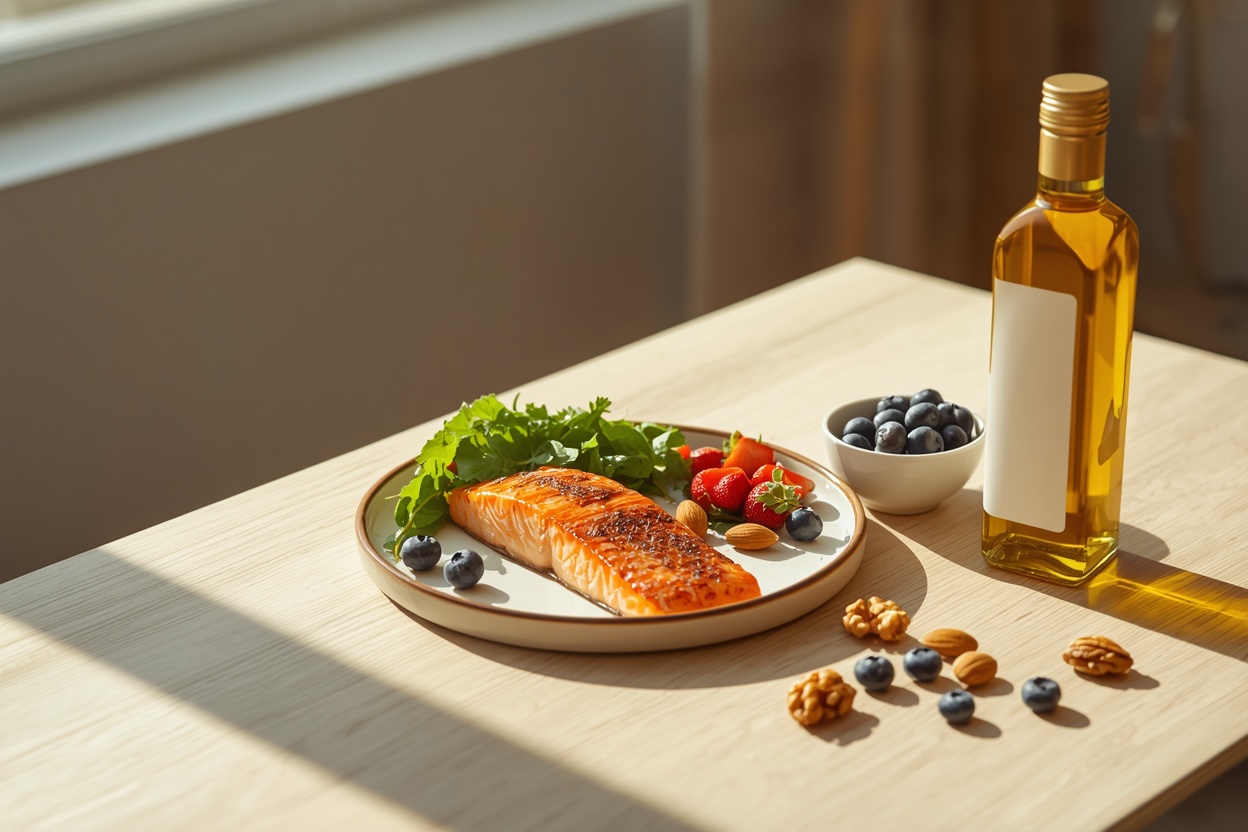
Patterns, not products
The strongest evidence sits with Mediterranean-style eating and its brain-focused cousin, the MIND diet. Observational studies link Mediterranean-style eating to slower cognitive decline. The pattern itself is unglamorous: fish, vegetables, berries, nuts, olive oil, beans. Little sugar, little ultra-processed food.
No food on that list is exotic. That is the point.
The six worth building around
Fatty fish
Salmon, sardines, mackerel. The main dietary source of DHA, the structural fat your brain is literally built from. The benefit appears clearest in people who eat little fish to begin with.
On your plate: twice a week, a palm-sized portion.
Leafy greens
Spinach, kale, romaine, broccoli. Folate, vitamin K and a pile of supporting compounds. In long-term observational studies, a daily serving of greens tracks with slower cognitive aging.
On your plate: one real serving most days.
Berries
Blueberries, strawberries, whatever is in season. Berries are among the most studied fruit groups for brain aging. Frozen works exactly as well as fresh, which makes this the cheapest habit on the list.
On your plate: a handful, three to four times a week.
Nuts and olive oil
Walnuts, almonds, extra virgin olive oil. The fat backbone of the pattern. They replace the worse fats, which is half of their benefit: every use pushes butter and margarine off the plate.
On your plate: a small handful of nuts daily; olive oil as the default fat.
Eggs
A practical source of choline, a building block for acetylcholine, a neurotransmitter involved in memory. Cheap, fast, versatile. For most people an egg a day fits fine.
On your plate: up to one a day, any style.
Beans and legumes
Lentils, chickpeas, black beans. Steady fuel without the blood sugar spikes that produce afternoon fog. Fiber feeds the gut, and the gut-brain connection is a real research area, not a magazine trend.
On your plate: three to four servings a week.
What works against your brain
Sugar. Blood sugar swings produce the fog you feel by 3 p.m., and long-term high sugar intake is linked to worse cognitive outcomes in observational studies. Dessert is fine. A daily sugar habit is the problem.
Ultra-processed food. Anything engineered to be impossible to stop eating. These products displace the real food from the list above, and that displacement is the damage.
Regular heavy alcohol. It suppresses REM sleep, fragments the night and erodes recall over time. Cutting back on alcohol often improves sleep and recall within weeks to months.
A week in practice
- Monday: fish dinner, greens on the side
- Tuesday: lentil soup for lunch, berries with breakfast
- Wednesday: eggs in the morning, handful of nuts as the snack
- Thursday: beans in any form, olive oil instead of butter
- Friday: second fish dinner of the week
- Weekend: keep the defaults, enjoy the rest
Where supplements fit
Food covers the base. Supplements fill the gaps that tests or diet reveal: B12 when you run low, DHA when you eat no fish, vitamin D when levels drop. We covered which ones have real evidence in Vitamins for Memory. Everything beyond that lives in the Brain Health 50+ hub.
The bottom line
Feed your brain the boring way: fish twice a week, greens most days, berries and nuts, olive oil as the default fat, beans a few times. Run it for a month. Many readers report the clearest result first in their afternoons: less fog, steadier energy.
Frequently Asked Questions
Is the Mediterranean diet proven to prevent dementia?
Not proven. Observational studies link Mediterranean-style eating to slower cognitive decline, but they do not prove cause. The pattern is associated with better brain aging, not a guaranteed shield.
How much fish should I eat for brain health?
Twice a week, a palm-sized portion of fatty fish like salmon, sardines or mackerel. That covers your DHA base. More is fine, but twice a week is where the evidence sits.
Are supplements better than food for brain health?
No. Food covers the base. Supplements fill gaps that blood tests or diet reveal: B12 when low, DHA when you eat no fish, vitamin D when levels drop. Fix the plate first.
Is sugar really bad for your brain?
Blood sugar swings produce afternoon fog. Long-term high sugar intake is linked to worse cognitive outcomes in observational studies. Dessert is fine. A daily sugar habit is the problem.
What is the MIND diet?
A hybrid of the Mediterranean and DASH diets, designed specifically for brain health. It emphasizes berries, leafy greens, nuts, fish, beans and olive oil while limiting sugar, red meat and butter.
Can I get enough DHA without eating fish?
Algae-based DHA supplements exist and work. The dose is lower than in fish, so check the label. For vegetarians, algae is the practical path. Everyone else: eat fish twice a week.
Sources and References
Need help choosing?
RecallPath does not sell supplements. We publish facts for readers over 40.
Email usThinking about supplements?
We compared the bottles that have real human data behind them: doses, prices, who each one fits. See the memory supplement breakdown